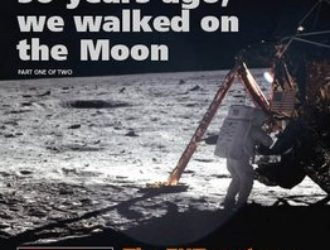
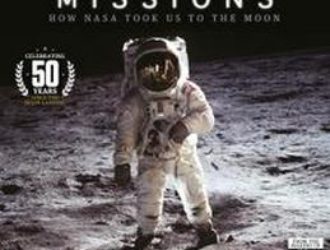
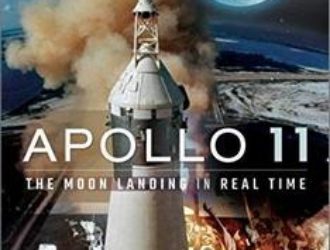
Half a century has passed since arguably the greatest feat of the twentieth century: when Neil Armstrong became the first man to walk on the Moon. Apollo 11: The Moon Landing In Real Time brings the mission...
Literature and received reports of lunar transient phenomena (LTP) in lunar programs of observations provided a collection of 2254 total of observations, from 557-1994 A.D. with sufficient information for...
Beginning with the landing of the Spirit and Opportunity rovers in 2004 and concluding with the end of the Curiosity mission in 2014, this second volume of The International Atlas of Mars Exploration continues...
Phenomenal new observations from Earth-based telescopes and Mars-based orbiters, landers, and rovers have dramatically advanced our understanding of the past environments on Mars. These include the first...
Research into the geological processes operating on Mars relies on interpretation of images and other data returned by unmanned orbiters, probes and landers. Such interpretations are based on our knowledge of...
This book describes the most complex machine ever sent to another planet: Curiosity. It is a one-ton robot with two brains, seventeen cameras, six wheels, nuclear power, and a laser beam on its head. No one...
Our knowledge of Mars has grown enormously over the last decade as a result of the Mars Global Surveyor, Mars Odyssey, Mars Express, and the two Mars Rover missions. This book is a systematic summary of what...
The questions of our origin and cosmic abundance of life are among the most compelling facing humanity. We have determined much about the nature and origin of the Universe and our place in it, but with...
This book presents a highly readable yet realistic view of the possibilities for human missions to Mars. It provides for the first time a ‘level-headed’ assessment of plans for human exploration of Mars to...
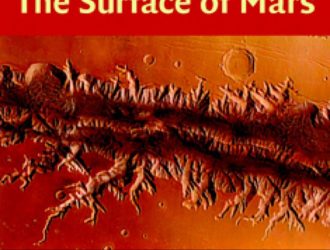
Containing beautiful and exiting images that will spark the imagination, this is essentially a picture book providing a visual tour of Mars. All the major regions and topographical features are shown and...
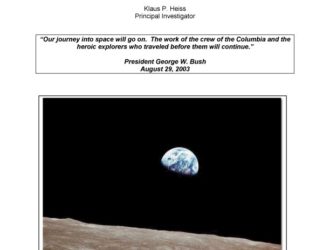
On 14 January 2004, President George W. Bush appeared before employees at NASA headquarters and announced a new plan to explore space and extend a human presence across our Solar System. This initiative...
Mars, popularly known as the Red Planet because of its distinct color, is visible with the naked eye and is one of very few planets in the Solar System in which it is possible to see weather phenomena and...
 30.06.2020